
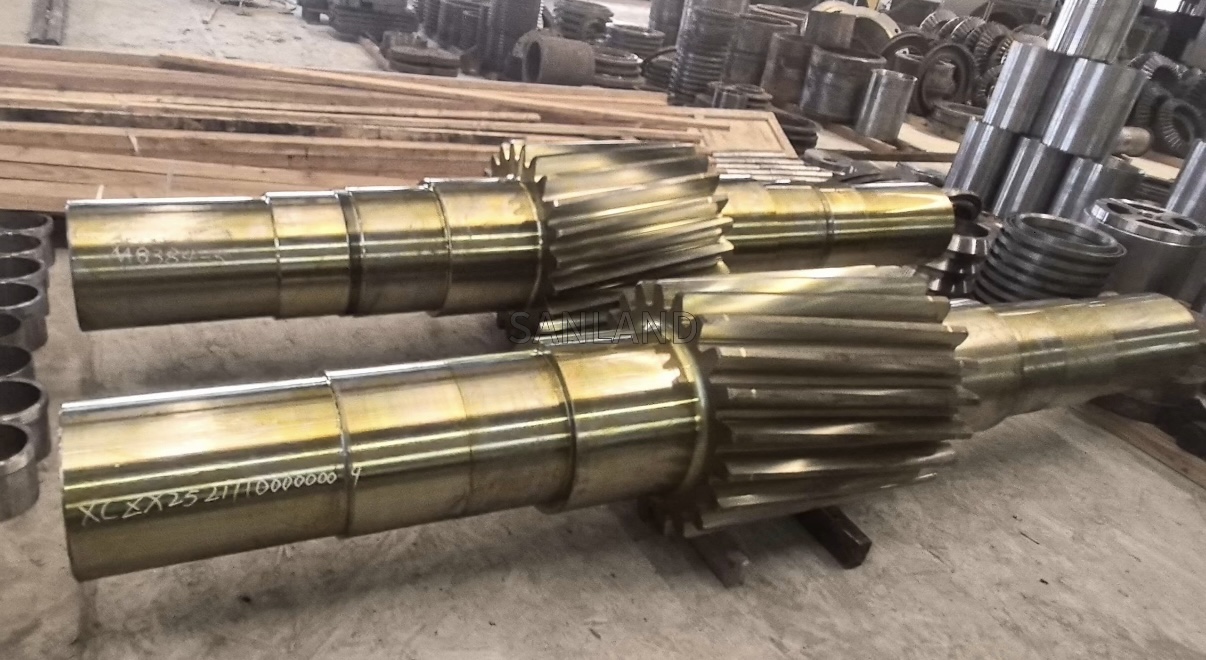
In ball mills and SAG mills, the pinion shaft is one of the most important components of the drive system. It is responsible for transmitting power and torque from the motor and gearbox to the mill shell, ensuring stable and continuous operation. The performance and manufacturing quality of the pinion shaft directly affect the efficiency, reliability, and service life of the grinding equipment.
The Function of a Mill Pinion Shaft
The primary function of a pinion shaft is to transfer power from the drive system to the mill. During operation, the pinion gear mounted on the shaft meshes with the mill's girth gear, transmitting rotational force to the shell and allowing the mill to operate continuously. As a key link between the power source and the grinding system, the pinion shaft plays a critical role in overall equipment performance.
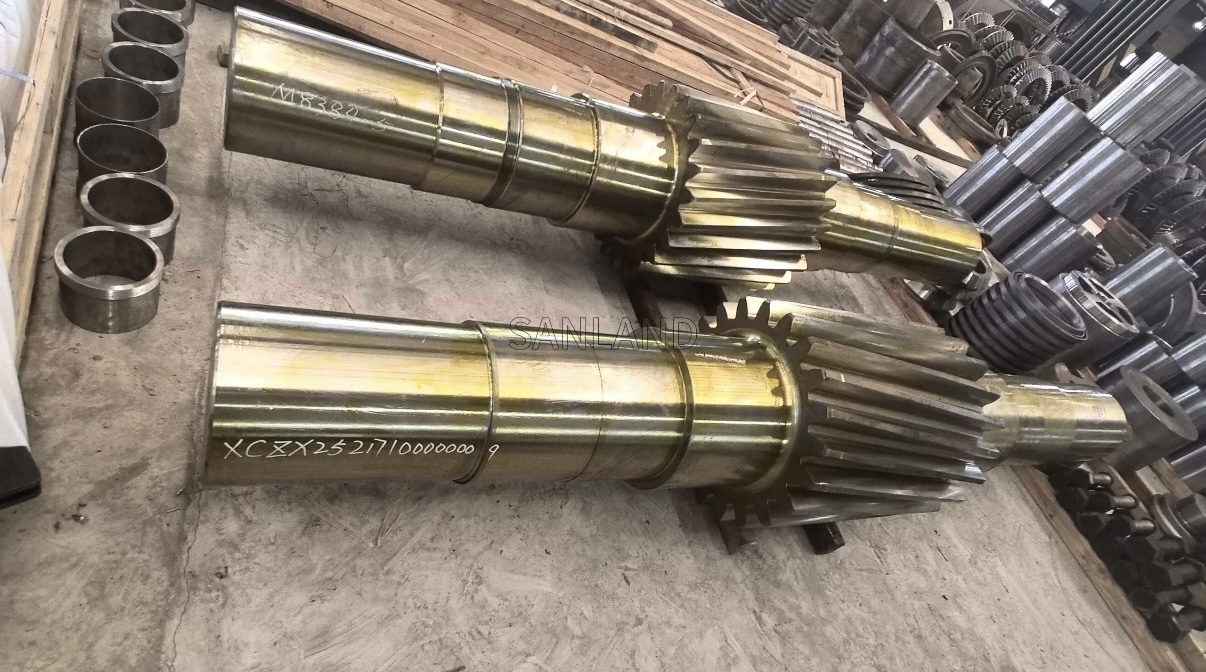
How Does a Mill Pinion Shaft Work?
When the mill starts, power is delivered from the motor through the gearbox to the pinion shaft. The pinion gear rotates and engages with the girth gear mounted on the mill shell, causing the shell to rotate at a controlled speed. As the mill turns, ore and grinding media are lifted and dropped inside the shell, creating impact and grinding forces that reduce the material to the desired particle size.
Why Is Pinion Shaft Quality Important?
Because it operates under high torque, heavy loads, and continuous vibration, the pinion shaft must meet strict requirements for material strength, heat treatment, and machining accuracy. A high-quality pinion shaft helps improve transmission efficiency, reduce wear, minimize maintenance costs, and extend equipment service life. It is widely used in ball mills, SAG mills, and other grinding equipment found in gold, copper, iron ore, and mineral processing operations worldwide.
For more information about mill pinion shafts, girth gears, and grinding equipment spare parts, please feel free to contact us.


Ember: +86 15940027485
kimosales@sanlandmet.com

Ember: +86 15940027485
kimosales@sanlandmet.com

Юлия: +86 17612428726
17612428726@sanlandmet.com

Tel:+86 15940027485
Email:kimosales@sanlandmet.com